Nalanda Gedige
Some 35 kilometres from the Matale Town is Nalanda Gedige. From Nalanda Junction visitors can follow Gedige Road for around six kilometres, to arrive here.
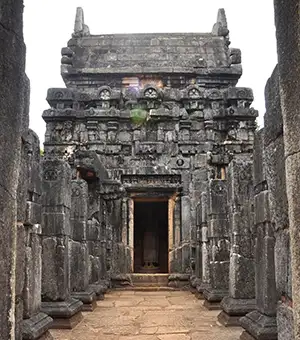
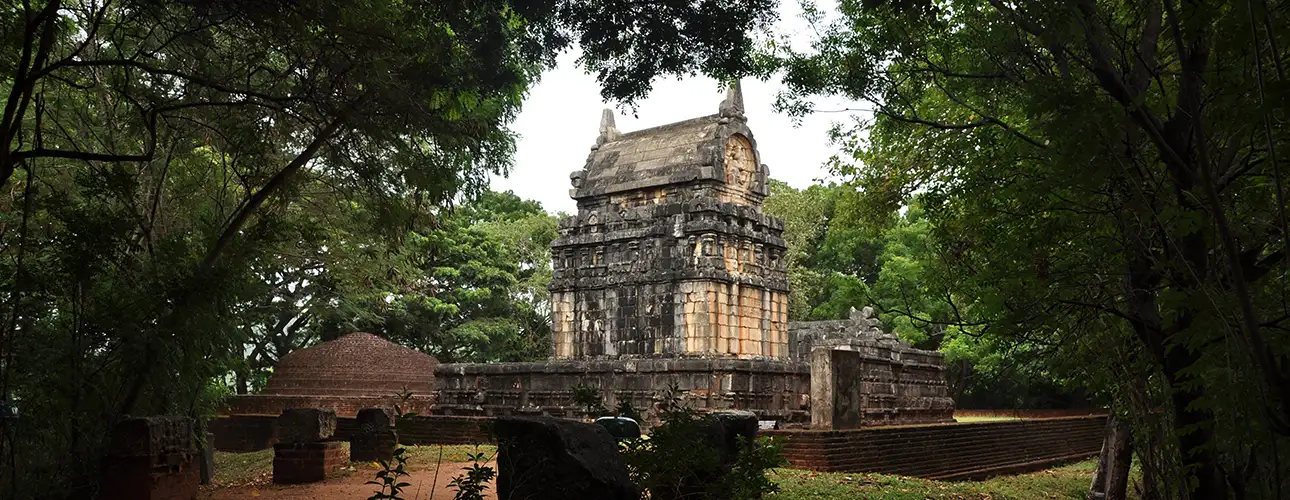
A unique feature of this building is that it has been built entirely of stone complemented by a hybrid style of architecture, which includes Hindu elements and tantric Buddhist carvings, thus an extraordinary combination of Hinduism and Buddhism.
“There is an unidentified statue found in Nalanda Gedige by archaeology department of Sri Lanka and according to the appearance it has no similarity with a human being but it shows more similarities to an extra terrestrial being.”
Referred to as ‘Nalanda’ by the locals, the present structure was relocated from its original location circa 1975 following the flooding of the Bowatenne Tank. The original site was considered as the center of Sri Lanka
From the Car Park a lovely promenade shrouded with foliage and trees welcomes guests as they approach.
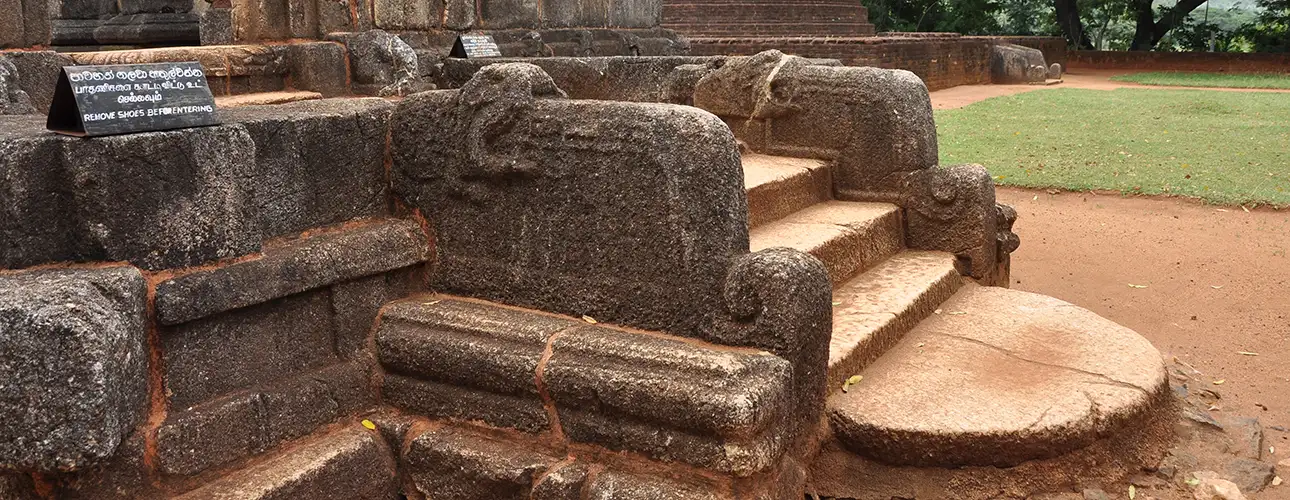
The original structure is said to have included a Mandapaya (recitation platform) and Vimana (structure over the garbhagriha or inner sanctum). The design of the Sikhara, a dome-shaped crowning cap above the Vimana is indeed elegant.
“Land was acquired round this little-known and solitary shrine of granite construction, popularly styled gedige. It is situated on raised ground in paddy fields, picturesquely surrounded by low hills and wooded hamlets. In 1911 a small gang was detached from the labor force at Sigiriya to thoroughly root out all the jungle growth upon and around the ruin besides cutting still further back the earth silt hiding the bold stylites upon which the fane stands. Very special importance attaches to this unique temple, as it is the sole example yet discovered in Ceylon of composite styles of architecture judiciously blended to form a delightfully homogeneous edifice.
It will be necessary to gradually extend the open space to the north and east of the gedige ruin, so far as practicable, in reasonable expectation of discovering other buried members of the structure, before it is partially dismantled with a view to correct reconstruction. For this fine edifice cannot be allowed to remain in its present semi-deceptive elevation, when all stones on the ground have been recovered from the earth.”
H C P Bell Archaeological Commissioner 1912
There is also an image house with a standing Buddha, a statue of Ganesha and a Bodhisattva figure surrounded by an ambulatory passage. Today a small stupa, located on a square foundation enclosed by a brick wall can also be seen.
Located on the south side upon the tympanum (semi-circular or triangular decorative wall surface) is a carving of Kuvera, the God of wealth, seated on a lotus, the only such image on the island.
Visitors should also not miss the Manava Maithunyaya,’ an erotic Tantric carving known as ‘which depicts the sexual union of a lion and two men inspired by South Indian influence
Despite some comments that the structure follows Pallava style Dravidian architecture, others also mention that this structure may have been dedicated to a Mahayanaa cult with pronounced Tantric learning
There is a small museum here that provides an explanation of the carvings and Brahmi inscriptions on rectangular stone slabs.